150 years ago on 25 August this year, a brilliant, determined, passionate, compassionate woman was born. In her lifetime, Eglantyne Jebb’s work not only saved many thousands of young lives, but also permanently changed the way the world both considers and treats children, yet her name is hardly known.
Most readers here will know that in 1919, in the shadow of what was then known as the Great War, Eglantyne Jebb’s public arrest in Trafalgar Square led her and her sister, Dorothy Buxton, to together establish the Save the Children Fund. Over the next few years, Jebb transformed this emergency relief operation into the permanent international, child-focused, development organisation that we know today. Dissatisfied with SCF’s reach and achievements, in 1924 Jebb pioneered the concept of children’s human rights. Her initial five-point statement, for which she secured the support of the fledgling League of Nations, has since evolved into the most universally accepted human right’s instrument in history – the United Nations Convention on the Rights of the Child.
Born in 1876, Jebb had inherited her keen sense of social justice from her parents. As a young woman she fell in and out of love with both men and women. She also fell off bicycles, wrote social novels sugar-coated in tales of romance, and believed she could commune with spirits. In 1913 she organised soup kitchens for desperate children in the Balkans, then a European war zone. Six years later, at the far side of the war, she took the law into her own hands to protest the use of the British economic blockade as a tool to push through greater reparations at the peace talks, and was prosecuted for her trouble. Having conducted her own defence in court, and been found guilty on technicalities, she audaciously secured the first donation to Save the Children from the chief prosecutor.
The British people in turn reviled and revered Jebb. At an early public meeting, at London’s Royal Albert Hall, crowds arrived with rotten vegetables to throw at the ‘traitor sisters’ who wanted to give succour to the enemy. Having heard their pleas for the suffering children of Austria and Germany, however, their audience instead opened up their purses, giving generously to help provide life-saving aid. As we know, Save the Children still relies generous donations from the British public, as well as from individuals and institutions around the world. But how is Jebb herself remembered in this anniversary year?
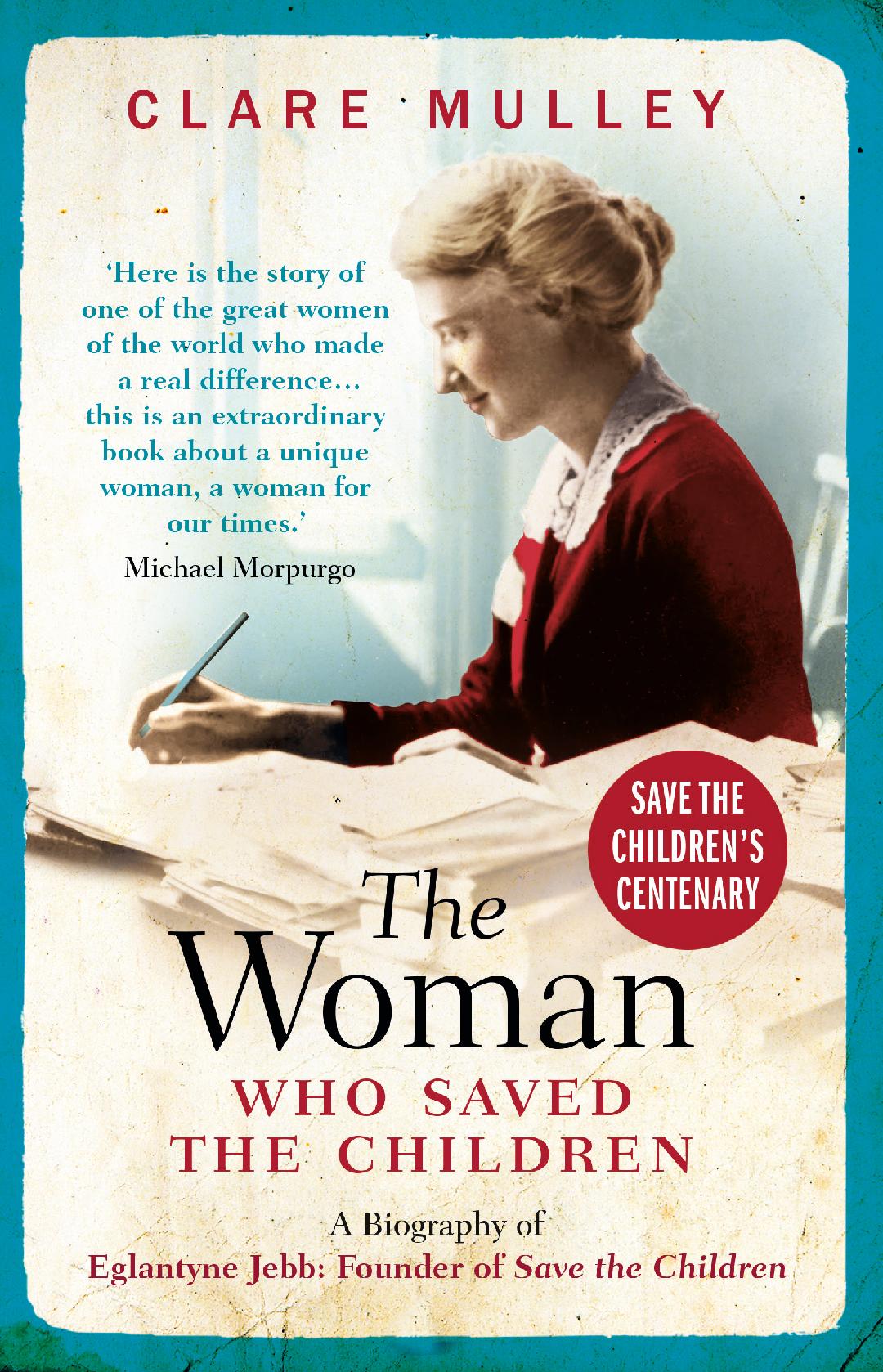
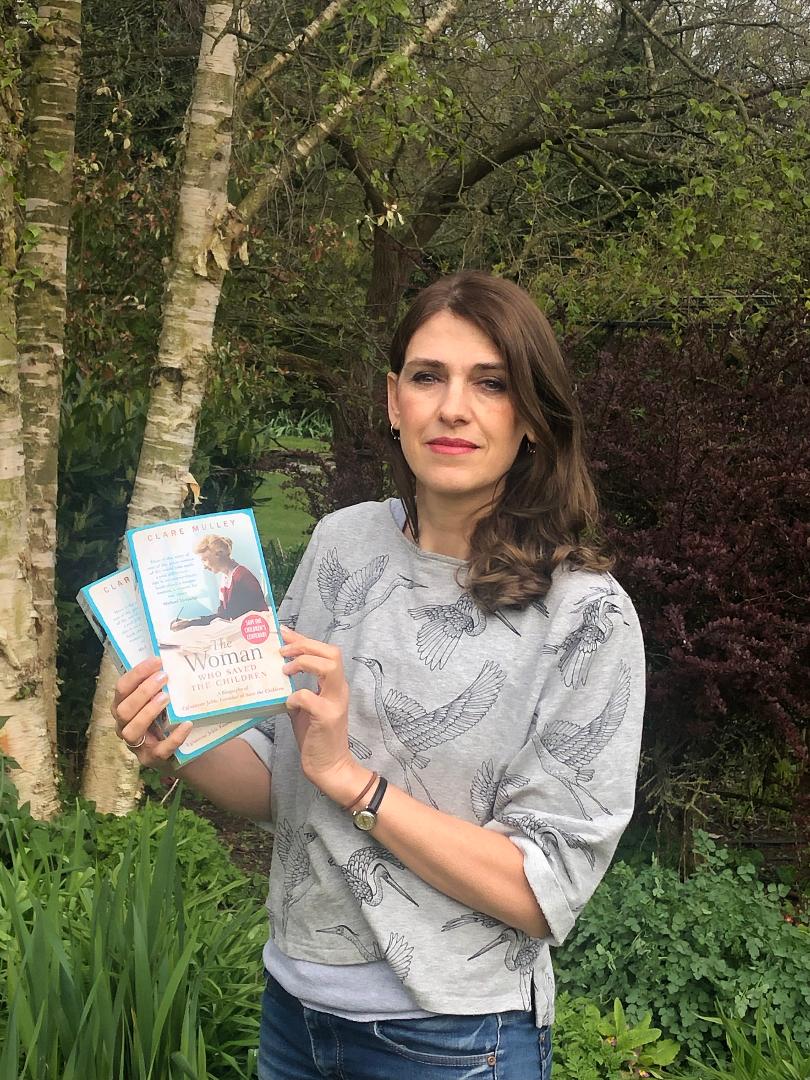
I wrote a biography of Jebb to mark the 90th anniversary of Save the Children, which won the then Daily Mail Biographer’s Club prize. If you don’t know Jebb’s story, please get the book – all author royalties are donated to the Fund. Rather fantastically, last year, following an introduction by Janti Soeripto, the CEO of Save USA, this book was optioned for film. I am looking forward to seeing a script sometime later this year or next.
Meanwhile there have been several other initiatives over the years to remember Jebb. In 2016, she was among the ‘British humanitarians’ commemorated by the Royal Mail in a set of stamps, to honour her work advocating for Children’s rights. There are two blue plaques to Jebb, one in Marlborough, where she spent a year teaching in a local school, the other in Cambridge where she worked for the Charity Organisation Society for some years. (Sadly I have not yet been able to confirm a London address on which she might receive an English Heritage blue plaque. Do send suggestions!)
Jebb’s hometown of Ellesmere in Shropshire has a bronze statue, and a few years ago proudly added to their town signs the notice, ‘The Birthplace of Eglantyne Jebb.’ A bronze bust of Jebb, sculpted by Ian Wolter, has a permanent home in the library of Oxford college Lady Margaret Hall, Jebb’s alma mater, where she is also remembered with some glass chandeliers in the chapel, paid for by her college friends not long after her death. This has always made me smile as, when a student there, Jebb once complained that if the next intake of students was no more interesting than the last, she would put a bomb in the chapel to liven things up!
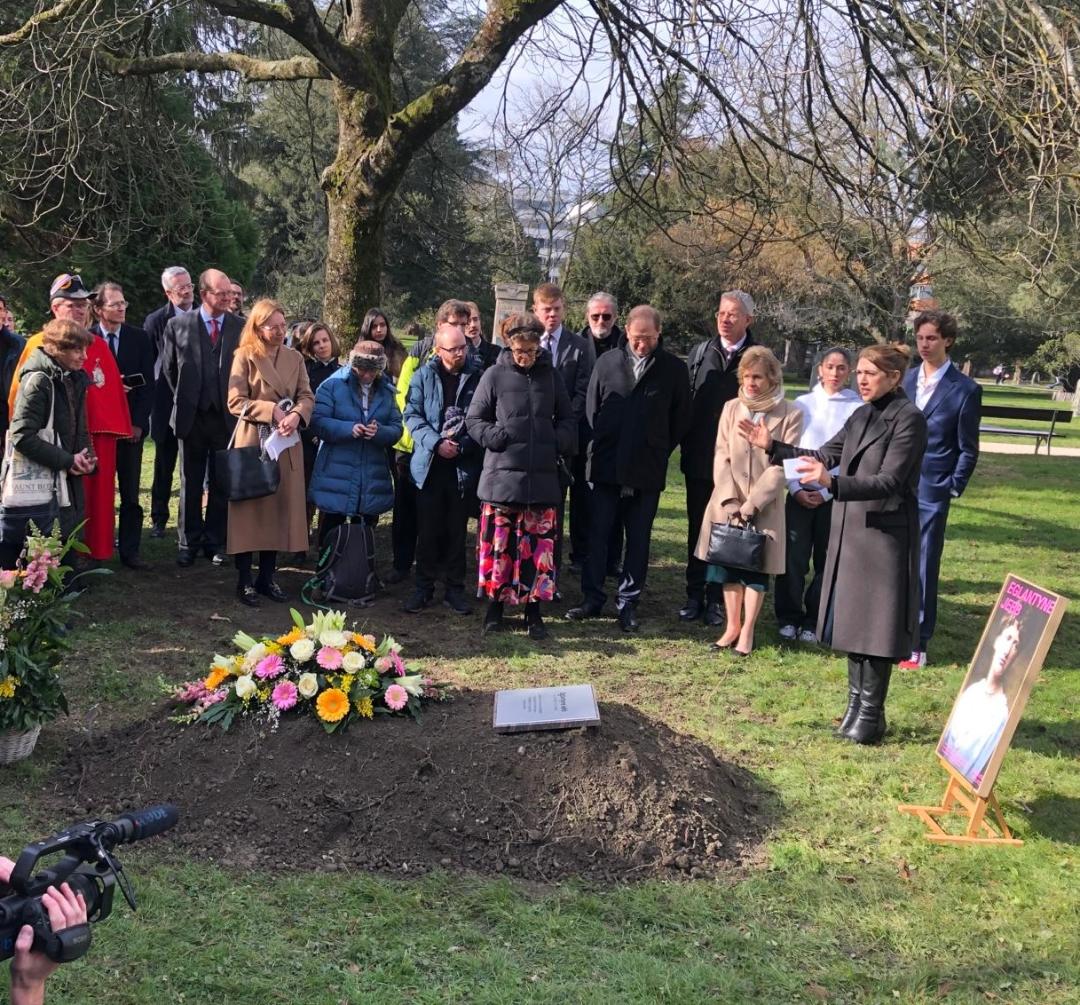
Most recently, in 2024, to mark the centenary of the Declaration of Geneva – Jebb’s first statement of children’s human rights, the City of Geneva, which already had a children’s play-park in her name, paid tribute to Jebb be reinterring her in their Cimetiére des Rois – the prestigious Cemetery of Kings. I was honoured to give the graveside address in front of her family and local representatives from SCF, the UN, and the Swiss press.
Sadly however, despite her wonderfully dramatic life and remarkable achievements, Jebb is still little known in Britain. Hopefully the biopic will help to change this, but please spread the word of her name and her work. As Jebb herself said, ‘the world is not ungenerous, but unimaginative and very busy… We have to devise a means of making known the facts in such a way as to touch the imagination of the world.’